
A Reverse Salary Calculator is a useful online tool for people who want to find out what gross salary they need to earn in order to receive a specific amount as take-home pay. Normally, salary calculations start with gross income and then subtract taxes and other deductions to estimate net salary. A Reverse Salary Calculator works in the opposite direction. You start with the amount you want to take home, and the calculator estimates the gross salary required to reach that target.
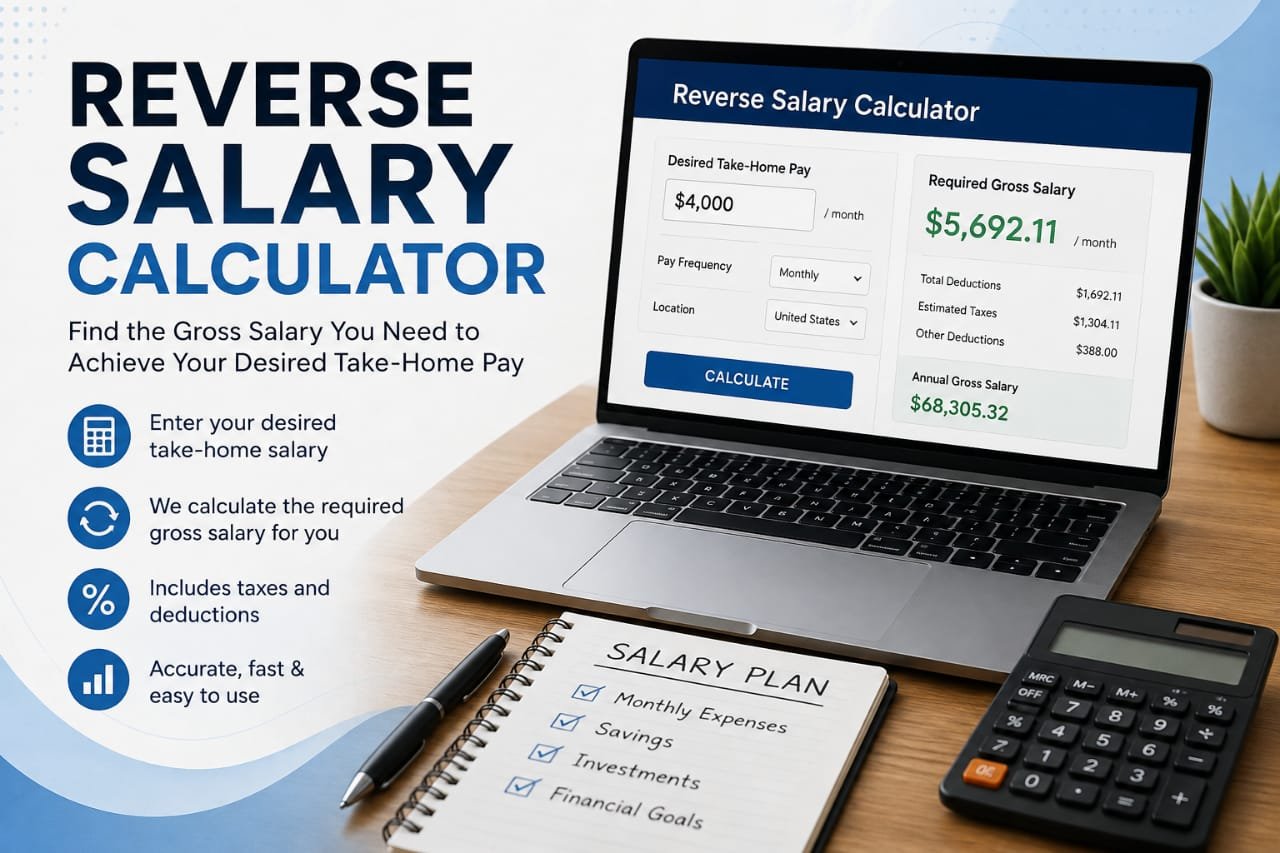
This can be especially helpful when you are negotiating a new job, planning a career move, or deciding how much salary you need to cover your monthly expenses. For example, if you want to receive $4,000 per month after taxes, simply asking for a $4,000 salary may not be enough. Your employer may quote a gross salary, while taxes and other deductions reduce the amount that eventually reaches your bank account. A Reverse Salary Calculator helps you understand this difference before making an important financial decision.
What Is a Reverse Salary Calculator?
A Reverse Salary Calculator calculates the estimated gross salary required to achieve a desired net or take-home salary. Instead of asking, “How much will I take home from this salary?” it asks, “How much should I earn before deductions if I want to take home this amount?”
This makes the tool different from a standard salary calculator. A normal salary calculator generally starts with gross income and calculates net income. A Reverse Salary Calculator starts with your target net income and works backward.
For example, imagine you want to take home $3,500 every month. Depending on your tax rate, location, deductions, and employment situation, you may need to earn considerably more than $3,500 in gross salary. The exact amount depends on your individual circumstances, but a Reverse Salary Calculator can provide a useful estimate.
How Does a Reverse Salary Calculator Work?
The basic idea behind a Reverse Salary Calculator is simple. You enter your desired take-home salary, and the calculator estimates the gross salary needed to reach that amount after applicable taxes and deductions.
The calculation may consider factors such as:
- Desired net salary
- Income tax
- Social security contributions
- Pension contributions
- Health insurance
- Tax credits
- Pay frequency
- Location or tax jurisdiction
- Other payroll deductions
The calculator then works backward from your target take-home amount. This saves you from trying to solve complicated tax calculations manually.
Keep in mind that salary taxes can vary depending on the country, state, province, tax bracket, filing status, and personal circumstances. Therefore, the result from a Reverse Salary Calculator should generally be treated as an estimate rather than a guaranteed paycheck amount.
Why Use a Reverse Salary Calculator?
There are many situations where knowing your required gross salary can be more useful than simply knowing your current net income.
Suppose you have calculated your monthly living expenses and determined that you need $5,000 per month to comfortably manage your budget. If you are looking for a new job, the important question is not simply whether a company offers a particular gross salary. You need to know whether that salary can provide the take-home income you require.
A Reverse Salary Calculator gives you a starting point for that calculation.
It can help you:
- Set a realistic salary target.
- Prepare for salary negotiations.
- Compare job opportunities.
- Plan monthly expenses.
- Understand the impact of taxes.
- Estimate the gross income needed for a specific lifestyle.
- Make better career decisions.
Reverse Salary Calculator for Salary Negotiations
Salary negotiation is one of the most practical situations in which a Reverse Salary Calculator can help.
Many employees know how much money they need each month but do not know what gross salary to request from an employer. If your target is based on your monthly expenses, savings goals, rent, loan payments, and other financial commitments, you can work backward from that target.
For instance, suppose your financial plan requires approximately $4,500 in monthly take-home pay. Instead of randomly choosing a salary expectation, you can use a Reverse Salary Calculator to estimate the gross salary that may be necessary.
You can then discuss your expected compensation with greater confidence.
However, salary negotiations should not be based only on take-home pay. Consider the complete compensation package, including bonuses, health benefits, retirement contributions, paid leave, stock options, allowances, and other benefits.
Gross Salary vs Net Salary
Understanding gross and net salary is essential when using a Reverse Salary Calculator.
Gross salary is the amount you earn before taxes and other deductions. It is often the salary figure shown in a job advertisement or employment contract.
Net salary is the amount you receive after deductions have been taken from your gross income. It is commonly called your take-home pay.
For example, an employer might offer a gross annual salary of $70,000. After applicable taxes and deductions, your actual take-home income could be lower. The exact difference depends on your circumstances.
A Reverse Salary Calculator reverses this process. Instead of starting with $70,000 and calculating the net amount, you enter your desired net amount and estimate the gross salary required to achieve it.
Factors That Can Affect Your Required Gross Salary
The gross salary you need depends on several factors. This is why two people earning the same gross salary can sometimes receive different net amounts.
Income Tax
Income tax is one of the biggest factors affecting take-home pay. Tax rates and brackets differ between countries and, in some places, between states or regions.
Social Security Contributions
Some employees are required to contribute a portion of their earnings to social security or similar government programs. These contributions reduce take-home pay.
Retirement Contributions
If you contribute to a workplace pension or retirement plan, part of your salary may be deducted before it reaches your bank account.
Health Insurance
Depending on your country and employment arrangement, health insurance premiums may also affect your net salary.
Tax Credits and Allowances
Certain employees may qualify for tax credits, allowances, or deductions that reduce their overall tax liability. These can change the gross salary required to reach a specific take-home amount.
Because all of these factors can influence the final result, a Reverse Salary Calculator should use the most relevant information available for your situation.
How to Use a Reverse Salary Calculator
Using a Reverse Salary Calculator is usually straightforward.
First, enter the amount you want to receive as your net or take-home salary. You may enter a monthly or annual target depending on the calculator.
Next, select your location and provide any relevant tax information. Some calculators may ask for your filing status, pay frequency, retirement contributions, or other deductions.
Finally, review the estimated gross salary.
For example, if your target is $4,000 per month, the calculator will estimate the annual and monthly gross income needed to potentially provide that take-home amount after deductions.
The more accurate information you provide, the more useful the estimate will be.
Monthly vs Annual Reverse Salary Calculations
A Reverse Salary Calculator can be useful for both monthly and annual salary planning.
If you know how much you need each month, you can begin with your monthly take-home target. This is useful for budgeting rent, groceries, transportation, utilities, savings, and other regular expenses.
If you are negotiating an annual salary, you can instead calculate your required yearly gross income.
For example, someone who needs a particular monthly net income can use the calculator to estimate the corresponding annual gross salary. This makes it easier to communicate salary expectations during job interviews.
Reverse Salary Calculator for Job Seekers
Job seekers can benefit significantly from using a Reverse Salary Calculator before applying for positions.
Imagine that you are searching for a new job and know that you need a certain amount of money each month to maintain your budget. Looking only at job titles or advertised salaries may not give you the complete picture.
By calculating your required gross income, you can establish a minimum salary target.
This can help you avoid applying for positions that are unlikely to meet your financial requirements. It can also give you a stronger starting point when an employer asks about your salary expectations.
Can a Reverse Salary Calculator Give an Exact Salary?
A Reverse Salary Calculator can provide a useful estimate, but it may not always predict your exact paycheck.
Taxes and payroll deductions can depend on individual circumstances. Tax laws can also change over time. Bonuses, benefits, overtime, retirement contributions, and other forms of compensation may further affect the final amount.
For this reason, you should use the calculator as a planning and estimation tool. For an exact figure, your employer’s payroll department or a qualified tax professional can provide information based on your specific circumstances.
Benefits of Planning Salary From Your Take-Home Pay
Most people plan their finances around the money that actually reaches their bank account. Rent, food, transportation, savings, entertainment, and loan payments are generally paid using net income rather than gross income.
Starting with your desired take-home pay can therefore make salary planning more realistic.
A Reverse Salary Calculator allows you to connect your financial goals with a potential salary target. Instead of choosing a salary number without understanding its impact, you can determine approximately how much gross income may be required.
This approach can be particularly helpful when planning a major career change or negotiating compensation.
Final Thoughts
A Reverse Salary Calculator is a simple but valuable tool for anyone who wants to work backward from a desired take-home salary. It helps you estimate the gross income that may be required after taxes and other deductions.
Whether you are negotiating a new job, planning your monthly budget, comparing employment offers, or setting a career income goal, understanding the relationship between gross and net salary is important.
Rather than guessing how much you need to earn, use a Reverse Salary Calculator to create a more realistic salary target. Remember that the result is an estimate because tax rules, deductions, benefits, and personal circumstances can vary. Still, having a clear estimate can make financial planning and salary negotiations much easier.
With the right information and a reliable Reverse Salary Calculator, you can better understand your earning requirements, plan your finances with confidence, and make more informed decisions about your next career opportunity.
Frequently Asked Questions About Reverse Salary Calculator
One Response