
Understanding how much you earn in a week, two weeks, twice a month, or a full year can be difficult when your pay schedule changes. A Salary Calculator for Different Pay Periods makes this process much easier by converting your salary into different payment periods. Whether you receive an annual salary or an hourly wage, a salary calculator can help you estimate your earnings and understand your overall income.
Table of Contents
ToggleWhat Is a Salary Calculator for Different Pay Periods?
A Salary Calculator for Different Pay Periods is an online tool that helps workers convert income between common pay schedules. For example, you may know your annual salary but want to find out how much you earn every month or every two weeks.
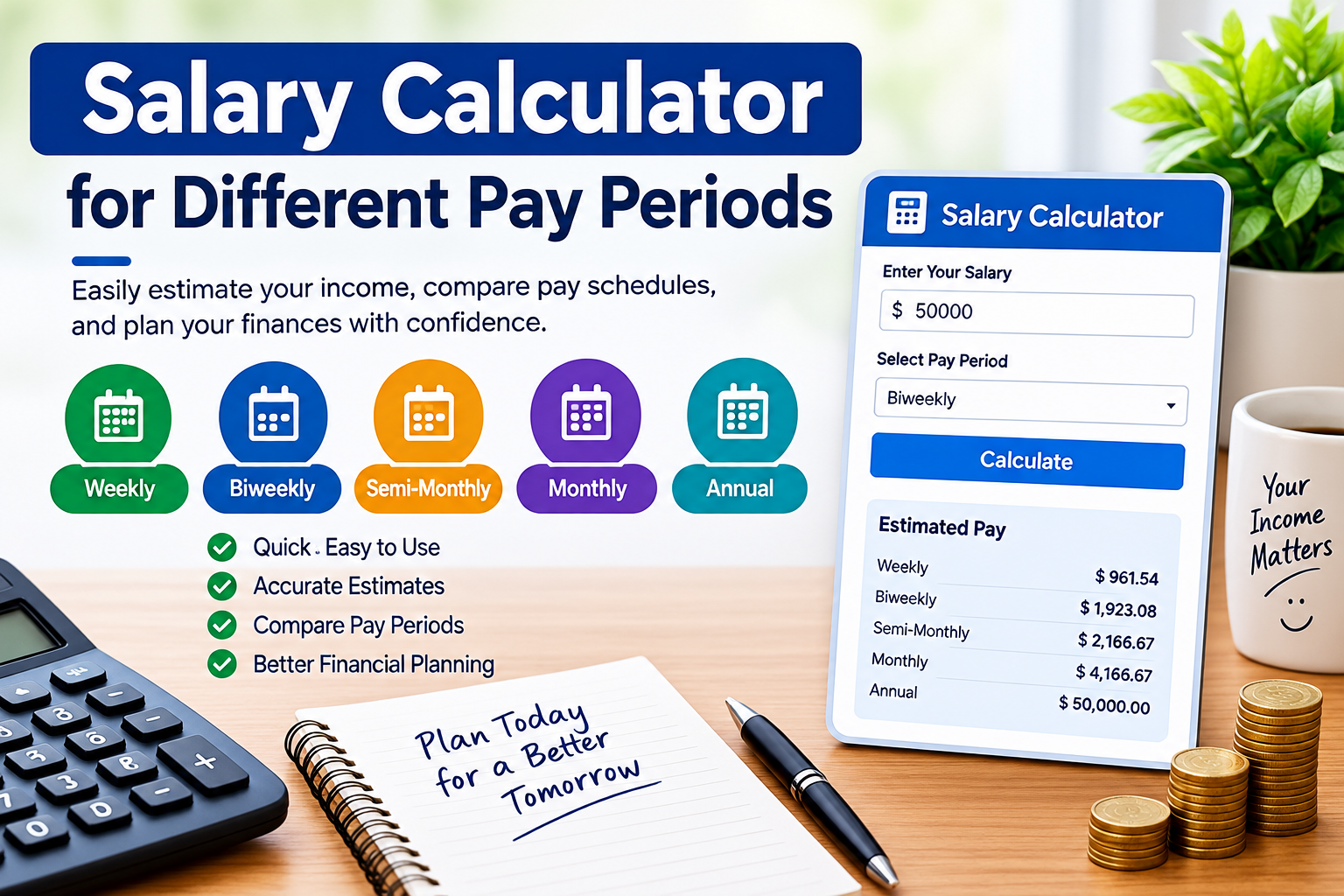
The calculator can provide estimates for weekly, biweekly, semi-monthly, monthly, and annual earnings. This is particularly useful for employees who want to understand their income without performing complicated calculations manually.
Why Different Pay Periods Matter
Not every employee receives a paycheck on the same schedule. Some workers Salary Calculator for Different Pay Periods are paid every week, while others receive payment every two weeks or twice a month. Understanding the difference between these schedules is important when planning a budget.
For example, a person with an annual salary can divide their income according to the number of pay periods in a year. Weekly pay generally involves 52 pay periods, while biweekly pay normally has 26. Semi-monthly pay usually has 24 pay periods.
A Salary Calculator for Different Pay Periods can quickly show these amounts and make income planning easier.
Common Salary Pay Periods
There are several common ways employees receive their salaries.
Weekly Pay
Weekly employees usually receive 52 paychecks per year. To estimate weekly income from an annual salary, the annual amount can be divided by 52.
Biweekly Pay
Biweekly employees are generally paid every two weeks, resulting in 26 pay Salary Calculator for Different Pay Periods periods in a typical year. Some months may therefore contain three paychecks instead of two.
Semi-Monthly Pay
Semi-monthly workers are normally paid twice each month, creating 24 pay periods per year. Paydays are often scheduled around specific dates, such as the middle and end of the month.
Monthly Pay
Monthly employees receive 12 paychecks per year. Monthly salary calculations are especially useful for people who organize their household budgets around monthly expenses.
How a Salary Calculator Works
Using a Salary Calculator for Different Pay Periods is usually simple. You enter your salary information and select the pay period you want to calculate.
For example, suppose your annual salary is $52,000. An estimated weekly salary can be calculated by dividing $52,000 by 52, while a biweekly salary can be estimated by dividing it by 26. Monthly income can be estimated by dividing the annual salary by 12.
These calculations provide a quick way to understand how the same annual income looks under different payment schedules.
Salary and Hourly Pay
A salary calculator can also be useful when comparing salaried and hourly employment. If you know your hourly wage and average working hours, you can estimate weekly, monthly, and annual income.
For example, someone working 40 hours per week at an hourly rate can Salary Calculator for Different Pay Periods estimate their regular weekly earnings and then convert that figure into an approximate annual income. However, actual earnings can vary because of overtime, unpaid time off, bonuses, and changes in working hours.
Gross Salary vs. Take-Home Pay
One important thing to remember is that salary calculations may show gross income rather than the amount you actually receive.
Gross salary is your earnings before deductions such as taxes, insurance, retirement contributions, or other payroll deductions. Take-home pay is the amount left after applicable deductions.
A Salary Calculator for Different Pay Periods can help you understand gross earnings across different schedules, but actual take-home pay depends on your location, tax situation, benefits, and other deductions.
Benefits of Using a Salary Calculator
There are several benefits to using an online salary calculator. It saves time and reduces the need for manual calculations. It can also help employees compare job offers that use different payment schedules.
For example, one employer may advertise an annual salary, while another may describe compensation as an hourly rate. Converting both figures into the same pay period can Salary Calculator for Different Pay Periods make comparison easier.
A salary calculator can also help with budgeting, financial planning, and understanding how frequently you will receive income.
Plan Your Budget With Different Pay Periods
Knowing your pay schedule is important when creating a budget. Weekly and biweekly workers may need to plan around multiple paychecks, while monthly workers may need to manage expenses across a longer period.
Using a Salary Calculator for Different Pay Periods allows you to estimate your income before planning regular expenses. You can use the calculated figures to organize spending, savings, and other financial goals.
Final Thoughts
A Salary Calculator for Different Pay Periods is a convenient tool for understanding how your income changes across weekly, biweekly, semi-monthly, monthly, and annual schedules. It can help employees estimate earnings, compare compensation, and organize their budgets more effectively.
Whether you are starting a new job, comparing salaries, or simply trying to understand your paycheck, converting your income into different pay periods can give you a clearer picture of your earnings. Always remember that calculator results are estimates, and actual take-home pay may vary because of taxes and other deductions.
Understanding Your Paycheck Frequency
Your paycheck frequency can have a major effect on how you manage your regular expenses. Even when two employees earn the same annual salary, their individual paychecks can look different because they may be paid on different schedules. One employee might receive money every week, while another may receive a paycheck every two weeks or once a month.
A Salary Calculator for Different Pay Periods helps make these differences easier to understand. Instead of manually calculating every payment schedule, you can enter your salary and estimate how much you may receive during each period.
How Annual Salary Is Converted Into Paychecks
Annual salary is commonly used when companies advertise job opportunities. However, employees usually receive their earnings through regular paychecks rather than one annual payment.
For example, if an employee earns $60,000 per year, the amount received during each pay period depends on the employer’s payroll schedule. A weekly schedule divides the annual salary across approximately 52 payments, while a biweekly schedule divides it across approximately 26 payments.
A monthly schedule uses 12 payments per year. Therefore, the same annual Salary Calculator for Different Pay Periods salary can produce different paycheck amounts depending on the selected pay frequency.
Weekly Salary Calculations
Weekly pay is one of the easiest schedules to understand because employees receive a paycheck approximately every seven days. There are normally 52 weeks in a year.
To estimate weekly gross income, divide the annual salary by 52. This calculation provides a useful estimate for employees who want to plan weekly expenses such as transportation, groceries, subscriptions, and other regular costs.
A Salary Calculator for Different Pay Periods can perform this calculation automatically and display the estimated weekly amount.
Biweekly Salary Calculations
Biweekly pay means an employee receives a paycheck every two weeks. This normally results in 26 paychecks during a year.
Biweekly pay is slightly different from being paid twice a month. Because Salary Calculator for Different Pay Periods there are 52 weeks in a year, two-week payments create 26 pay periods. As a result, some calendar months can contain three paychecks instead of two.
This can be useful for budgeting because employees should understand that their monthly cash flow may not be exactly the same every month.
Semi-Monthly Salary Calculations
Semi-monthly pay generally means employees receive two payments each month. This creates 24 pay periods during a year.
For example, an employer may schedule payments around the 15th and final working day of each month. Unlike biweekly pay, semi-monthly schedules are connected to specific dates rather than a fixed number of weeks.
Using a salary calculator makes it easier to compare semi-monthly and biweekly income.
Monthly Salary Calculations
Monthly pay provides 12 paychecks throughout the year. This schedule is straightforward for people who prefer to organize their finances around monthly expenses.
If an employee knows their annual salary, they can estimate monthly gross income by dividing the annual amount by 12. The result can then be used when planning rent, utilities, transportation, food, savings, and other monthly expenses.
Comparing Different Pay Schedules
A major advantage of using a Salary Calculator for Different Pay Periods is the ability to compare different payroll schedules using the same annual salary.
Consider an annual salary of $72,000. The estimated gross amount can be converted into weekly, biweekly, semi-monthly, and monthly figures. Although the individual paycheck amounts change, the total annual salary remains approximately the same before deductions.
This comparison can be especially useful when reviewing job offers. One company may present compensation as an annual salary, while another may focus on an hourly rate or paycheck amount.
Using the Calculator When Changing Jobs
When looking for a new job, salary should not be the only factor considered. Pay frequency can also influence how your income arrives throughout the year.
A Salary Calculator for Different Pay Periods can help you estimate what your compensation may look like under a new employer’s payroll schedule. You can compare your current income with a potential salary and understand the approximate difference between weekly, biweekly, and monthly earnings.
This can make salary discussions and job comparisons easier.
Salary Calculations for Hourly Workers
Salary calculators are not only useful for salaried employees. Hourly workers can also estimate their income across different periods.
For example, an employee earning an hourly wage can multiply the hourly rate by the number of hours worked in a week. The estimated weekly amount can then be converted into biweekly, monthly, or annual income.
Actual earnings may change when working hours vary. Overtime, Salary Calculator for Different Pay Periods holidays, unpaid leave, and different work schedules can all affect the final paycheck.
Accounting for Bonuses and Additional Income
Regular salary is not always the complete picture of an employee’s compensation. Some workers receive bonuses, commissions, overtime payments, or other forms of additional income.
When estimating income, it is useful to separate regular salary from variable earnings. A calculator can provide a basic estimate based on regular compensation, while additional payments can be considered separately.
This approach gives employees a clearer understanding of predictable income versus income that may change from one pay period to another.
Gross Pay and Payroll Deductions
The amount shown by a salary calculation is often gross pay. Gross pay represents earnings before deductions.
Actual take-home pay may be lower because employers can withhold taxes and other amounts from a paycheck. Depending on the employee and location, deductions may include income taxes, social contributions, insurance premiums, retirement contributions, or other payroll items.
For this reason, a Salary Calculator for Different Pay Periods should be used as an estimation tool rather than a guarantee of the exact amount that will appear on a paycheck.
Better Financial Planning
Understanding your pay frequency can make financial planning easier. Once you know your estimated income for each period, you can organize expenses according to your actual cash flow.
Weekly earners may prefer weekly budgets, while monthly earners may find monthly budgeting more convenient. Biweekly employees can also plan around their regular two-week pay cycle and account for months when an additional paycheck arrives.
Having a clear view of income can make it easier to create realistic spending and saving plans.
Final Thoughts
A Salary Calculator for Different Pay Periods provides a simple way to understand income across multiple payroll schedules. Whether you are paid weekly, biweekly, semi-monthly, or monthly, converting your earnings into different periods can make salary information much easier to understand.
The calculator can be useful when comparing job offers, planning a budget, reviewing hourly wages, or estimating paycheck amounts. However, remember that gross salary is different from take-home pay, and actual earnings can vary because of taxes, deductions, overtime, bonuses, and working hours.
By understanding your pay period and calculating your estimated income, you can make more informed decisions about your salary and personal financial planning.
One Response